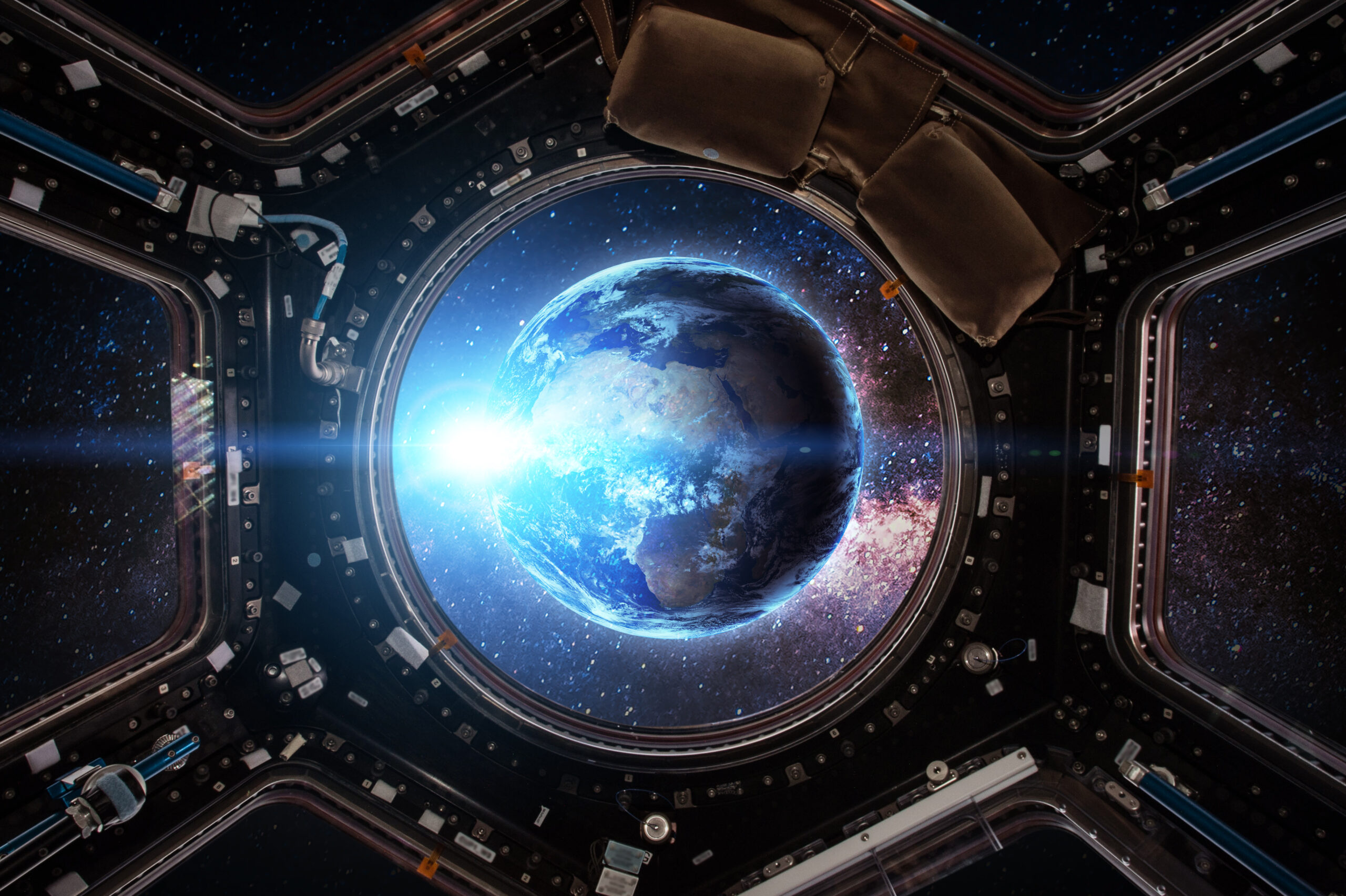
Growing up in a small village where the night sky stretched endlessly above Sakthikumar’s curiosity for space began long before he ever saw a rocket. The stars were not just distant lights, they were questions waiting to be answered. Night after night, he would look up, wondering what lay beyond the moon and the constellations. That quiet fascination in childhood slowly grew into a deep, lifelong passion for understanding the universe. Even then, he somehow knew he wanted to play a role in humanity’s journey beyond Earth.
That early spark led him toward aeronautical engineering in Karur, where he first learned the fundamentals of flight mechanics, propulsion, and the science of air and space. But as his understanding deepened, so did his ambitions. He realized his true calling wasn’t limited to aircraft, it was in the vastness of space itself. Believing that space technology could help address real challenges on Earth, he went on to specialize in Space Engineering and Rocketry at BIT Ranchi. There, he immersed himself in satellite systems, propulsion, and mission design, viewing each course and experiment not just as academic exercises, but as steps toward a much larger purpose: to use space as a platform for sustainable progress.
During those formative years, the influence of Dr. A.P.J. Abdul Kalam left a profound mark on him. Kalam’s life, rising from humble beginnings to become India’s “Missile Man” and President, demonstrated how science and innovation could transform a nation. His speeches and writings became a constant source of motivation, urging young engineers to see technology as a means of service, not just achievement. Inspired by this philosophy, He found himself drawn to satellite technology, the perfect blend of exploration and utility. To him, satellites weren’t just machines orbiting Earth; they were instruments of change, capable of improving communication, predicting weather, supporting agriculture, and empowering entire communities.
After completing his studies, he began his professional journey as R&D Head at BnG Spray Solutions, where he learned the art of translating research into real-world products. But it was his experience at the Indian Institute of Science (IISc) that truly transformed his approach to innovation. There, he discovered that the value of research lies not only in discovery but in its ability to solve tangible problems. He began focusing less on theoretical perfection and more on scalable, executable solution ideas that could move beyond the lab and make a measurable impact. That mindset would later become the foundation of his future venture.

The transition from a research leader to a startup founder didn’t happen overnight. Over the years, he explored many ideas, but one concept stood out above the rest: in-orbit satellite refueling. Unlike most projects that remained confined to prototypes or academic papers, this idea had clear commercial potential and immense global significance. It addressed two of the biggest challenges in modern space operations: space debris and cost inefficiency. He realized that the ability to refuel satellites in orbit could extend their operational life, reduce waste, and revolutionize how space assets are managed. What started as an R&D concept soon evolved into a bold entrepreneurial vision, and thus, OrbitAID was born.
Founded in 2021, OrbitAID represented more than a company; it was a statement of belief that India could pioneer technologies shaping the future of space sustainability. He began with a clear mission but understood that vision alone wasn’t enough; he needed the right partners. Mano Balaji was the first to join, sharing his conviction and helping to define the company’s technical and strategic direction. Two years later, Nikhil Balasubramanian came on board, bringing in fresh perspective and deep engineering expertise. Together, the trio built OrbitAID around trust, resilience, and a shared dream to create a sustainable model for future space operations where satellites could be serviced, refueled, and reused rather than discarded.
The core idea behind OrbitAID’s technology was simple yet transformative. Traditionally, satellites were treated as disposable assets, functioning for a few years before becoming space debris. OrbitAID aimed to change that paradigm by developing systems capable of refueling and extending the lifespan of satellites. This approach promised not only massive cost savings for operators but also a significant reduction in orbital waste, an ever-growing concern in the aerospace community. For him, the motivation wasn’t just the engineering challenge; it was the environmental and ethical responsibility of creating a cleaner, more sustainable space ecosystem. One successful refueling mission, he often says, can prevent thousands of kilograms of debris from being added to orbit.

However, pioneering new technology in India’s nascent private space sector came with formidable challenges. OrbitAID’s early days were defined by limited funding, lack of advanced facilities, and constant skepticism. Many doubted whether an Indian startup could truly build and commercialize space refueling systems. But instead of arguing, Sakthi and his team chose to prove their capabilities through results. They built working prototypes, filed patents, and established partnerships that validated their work. Gradually, support began to flow from IN-SPACe, the Tamil Nadu Government, and international collaborators, allowing OrbitAID to turn vision into momentum. Through sheer perseverance, the team demonstrated that innovation isn’t defined by geography but by determination and execution.
Reflecting on his journey from a star-gazing child in Karur to leading an internationally recognized space-tech company, Sakthikumar identifies three values that shaped his growth: curiosity, consistency, and courage. Curiosity led him to explore beyond conventional boundaries. Consistency kept him grounded during long periods when progress was invisible. And courage enabled him to take risks that others deemed impossible. These qualities became the DNA of OrbitAID and the driving force behind every success. The path was never linear, each breakthrough was built on countless small steps, setbacks, and lessons. Yet, what remained constant was his belief that India could not only participate in the global space industry but also lead it through innovation and sustainability.
Today, OrbitAID stands as one of India’s promising new-age aerospace ventures, symbolizing the country’s growing confidence in private space exploration. For Sakthikumar, however, recognition is secondary. What matters more is creating technology that leaves a lasting impact, solutions that ensure humanity’s progress in space is responsible, inclusive, and enduring.

When he speaks to young engineers and innovators, his message is both simple and profound: “Dream high, but start small.” He encourages them to master the fundamentals, respect the process, and see failure not as a setback but as a teacher. Space, he often reminds them, is not merely about rockets and satellites, it’s a test of resilience and purpose. The next generation, he believes, holds the power to redefine the future, not just in orbit but here on Earth. “Build with purpose,” he says, “because the sky isn’t the limit anymore, it’s just the beginning.”
No responses yet