In the small town of Karvetinagaram, life moved at an unhurried pace, and most children grew up within the confines of modest dreams. The narrow lanes, shaded courtyards, and palace-turned-schoolrooms held more history than ambition. Yet within one of those classrooms sat a boy who seemed restless in his curiosity. His name was N.K. Venkataramana, and while others memorized lessons with the ease of routine, he was consumed by questions that had no easy answers. How did thought begin? Where did memory live? How did something as fragile as a dream survive the hard weight of reality?
In his family, to dream of becoming a doctor was to stretch hope beyond the boundaries of circumstance. It was not just a difficult aspiration it was an impossible one. The journey demanded years of study, resources they did not have, and the courage to leave behind the familiar comfort of home. Yet his parents, with an instinct that came from love rather than logic, saw in their son a spark worth protecting. He was disciplined to the point of devotion, sincere in ways that did not waver. They trimmed every unnecessary expense, stretched every rupee until it became two, and invested not in comforts for themselves but in the promise of his future. Their sacrifices were quiet but relentless, and each one carried a message that words could not capture: they believed in him.

When the news arrived that Venkataramana had secured admission to Sri Venkateswara Medical College in Tirupati, it was not just his triumph it was the family’s. Years of effort had finally borne fruit. But the celebrations quickly gave way to the weight of new challenges. In Tirupati, he was surrounded by peers from privileged cities, students who had been coached and prepared in ways he had never known. Textbooks they considered for revision were entirely new to him. For a time, the gap between them felt wide enough to swallow him whole.
But retreat was never in his nature. What he lacked in exposure, he compensated with effort. He woke earlier, studied longer, and listened more intently. His resilience, sharpened in the narrow lanes of Karvetinagaram, became his armor. Slowly, the gap began to close. Anatomy unfolded its patterns, physiology revealed its rhythms, and pathology challenged his persistence. Yet amidst all the subjects, it was the brain that held him captive.

Most students turned away from neuroanatomy, intimidated by its impossible complexity. But where they saw overwhelming detail, he saw wonder. Every nerve, every fold, every shadow on a scan felt like a secret waiting to be revealed. To him, the brain was not just an organ it was the conductor of thought, the keeper of memory, the seat of identity itself. It held the essence of being alive. While others feared its mysteries, he leaned closer. By the time he completed his MBBS, his path had already chosen him. The question was no longer whether he would become a neurosurgeon, but how soon.
Neurosurgery demands the patience of a monk and the precision of a watchmaker. Hours-long operations unfold millimeters from disaster. Each decision can alter a life in ways irreversible and profound. The responsibility is ceaseless, and the margin for error is almost nonexistent. Yet for Venkataramana, this was not a deterrent. It was exactly what called to. His life had already been a preparation for difficulty. Scarcity had taught him endurance. The study had given him discipline. Competing against privilege had forged his courage. Neurosurgery was not the hardest path by accident; it was the only one that matched the spirit he carried within. At NIMHANS in Bangalore, the National Institute of Mental Health and Neurosciences, he found himself surrounded by the sharpest minds and the steepest expectations. Days dissolved into nights as he learned to steady his hands, sharpen his judgment, and strengthen his stamina. The weight of responsibility was immense, and yet he bore it with a quiet determination. Each time he picked up a scalpel or peered into a microscope, he carried not only his own ambition but also the sacrifices of his parents and the humility of his small-town roots.
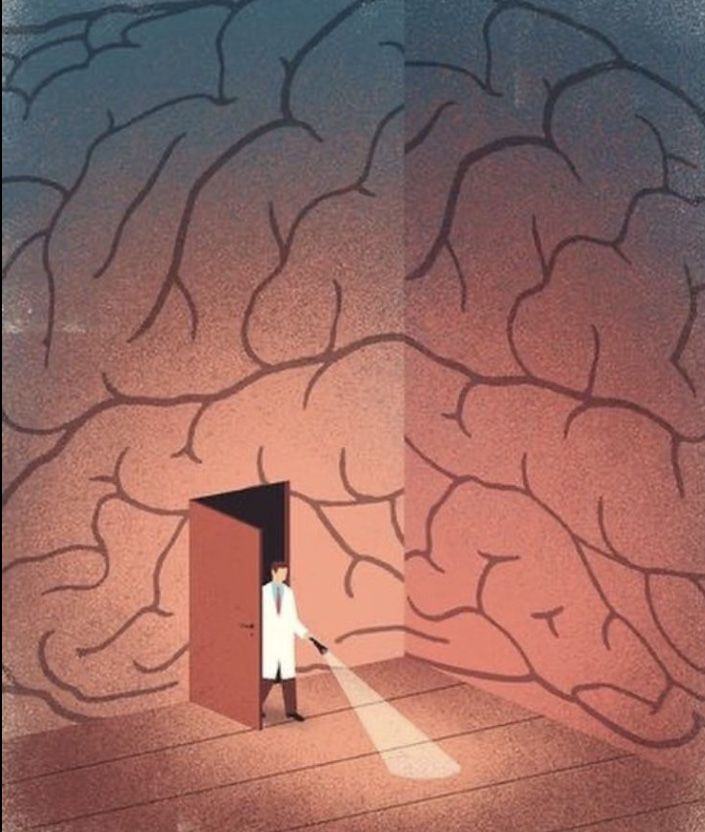
Before he became a pioneer in neurological care, before the accolades and the institutions he would later establish, he was simply a young man who chose the most demanding path not for prestige but for purpose. His story did not begin in the operating theater but in a home where belief outweighed resources, in a school where imagination grew faster than infrastructure, in a mind that refused to accept limits.
The making of Dr. N.K. Venkataramana is more than the story of a career. It is the story of a dream carried by sacrifice, of discipline forged in adversity, and of purpose discovered in the mysteries of the human brain. From a boy who once sat beneath the arches of a palace-turned-schoolroom, wondering where thoughts came from, he became a man who dedicated his life to unlocking those very secrets, one patient, one surgery, one discovery at a time.
No responses yet